

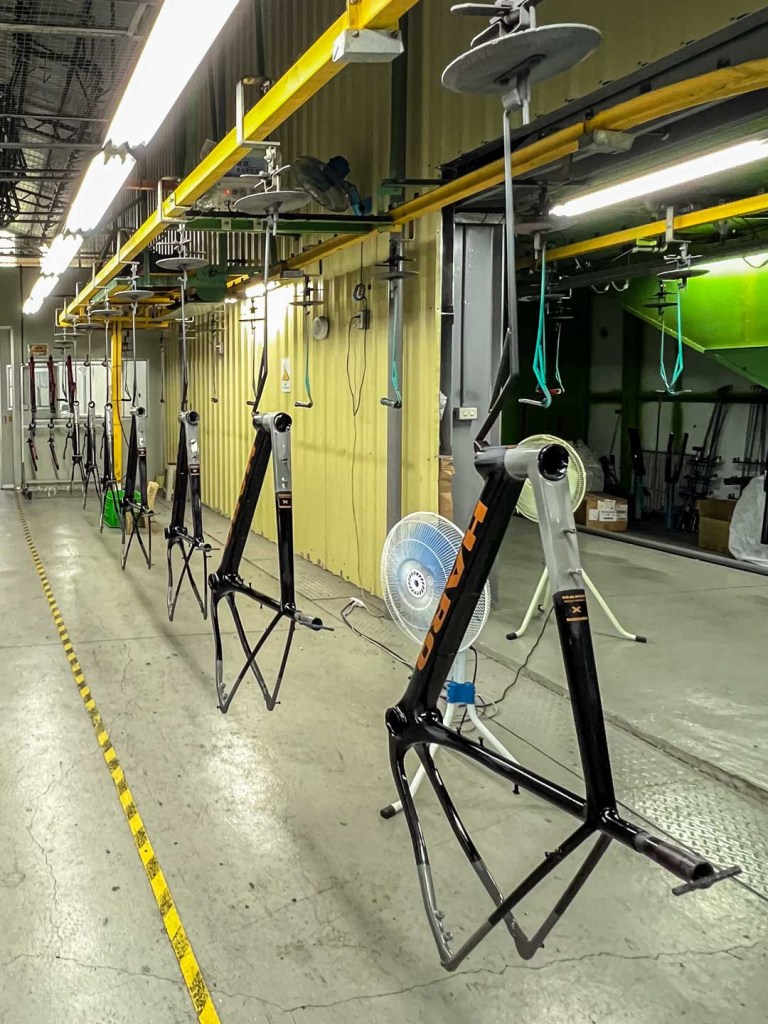



Located in the Taichung Industrial Park, the building’s exterior gives little indication that specialized bicycle frame painting happens here. Inside, the atmosphere is calm and functional. After a brief reception, I’m led to a quiet meeting room — comfortable, well-organized, and purposeful.
Rather than sit through a slide presentation, I opt to walk through the production floor for a more direct understanding of the processes involved. Jason Lin, GBN’s relatively young general manager, takes the lead. At just over 30, his profile stands in contrast to the typically older leadership in this industry.
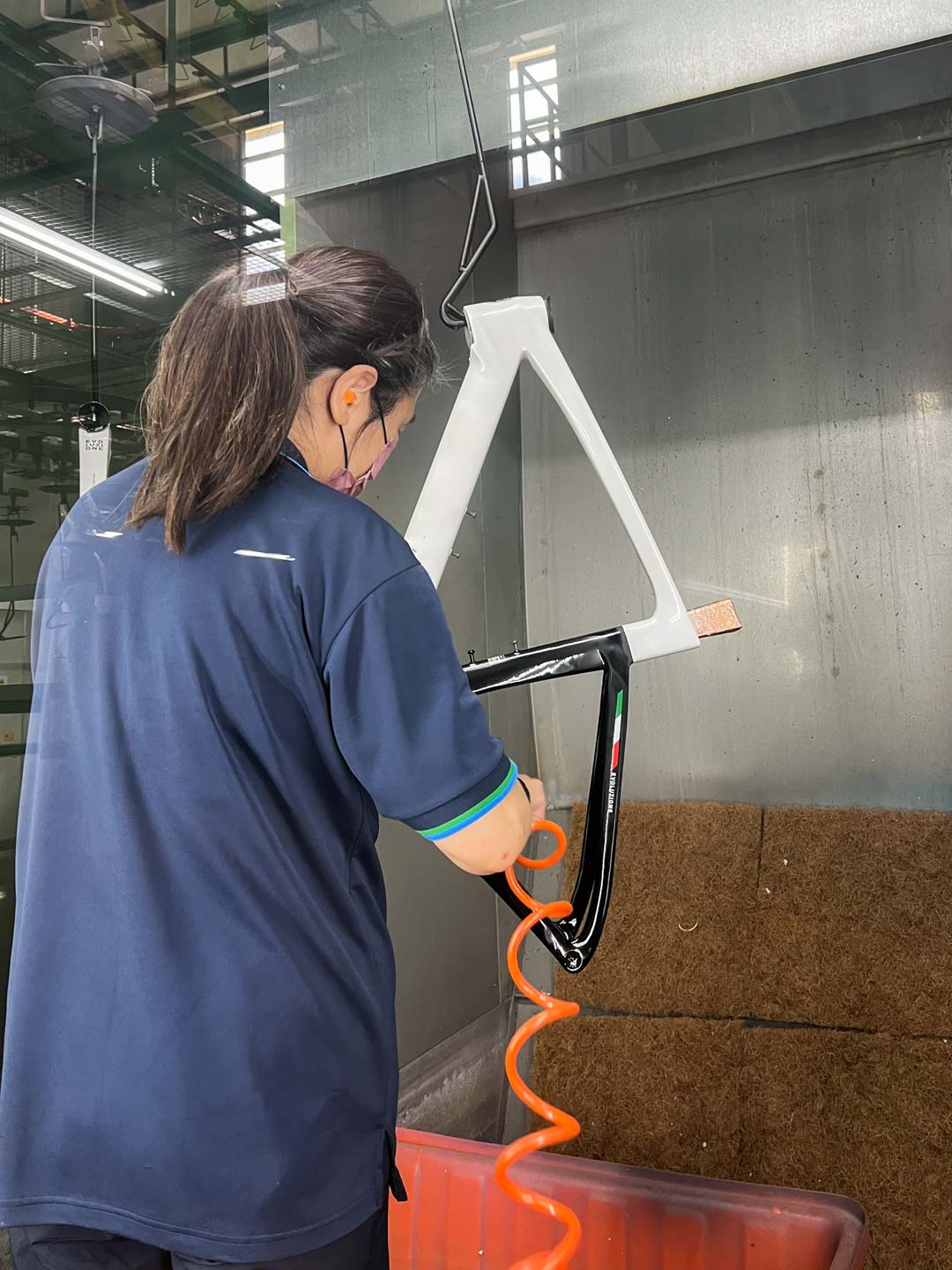
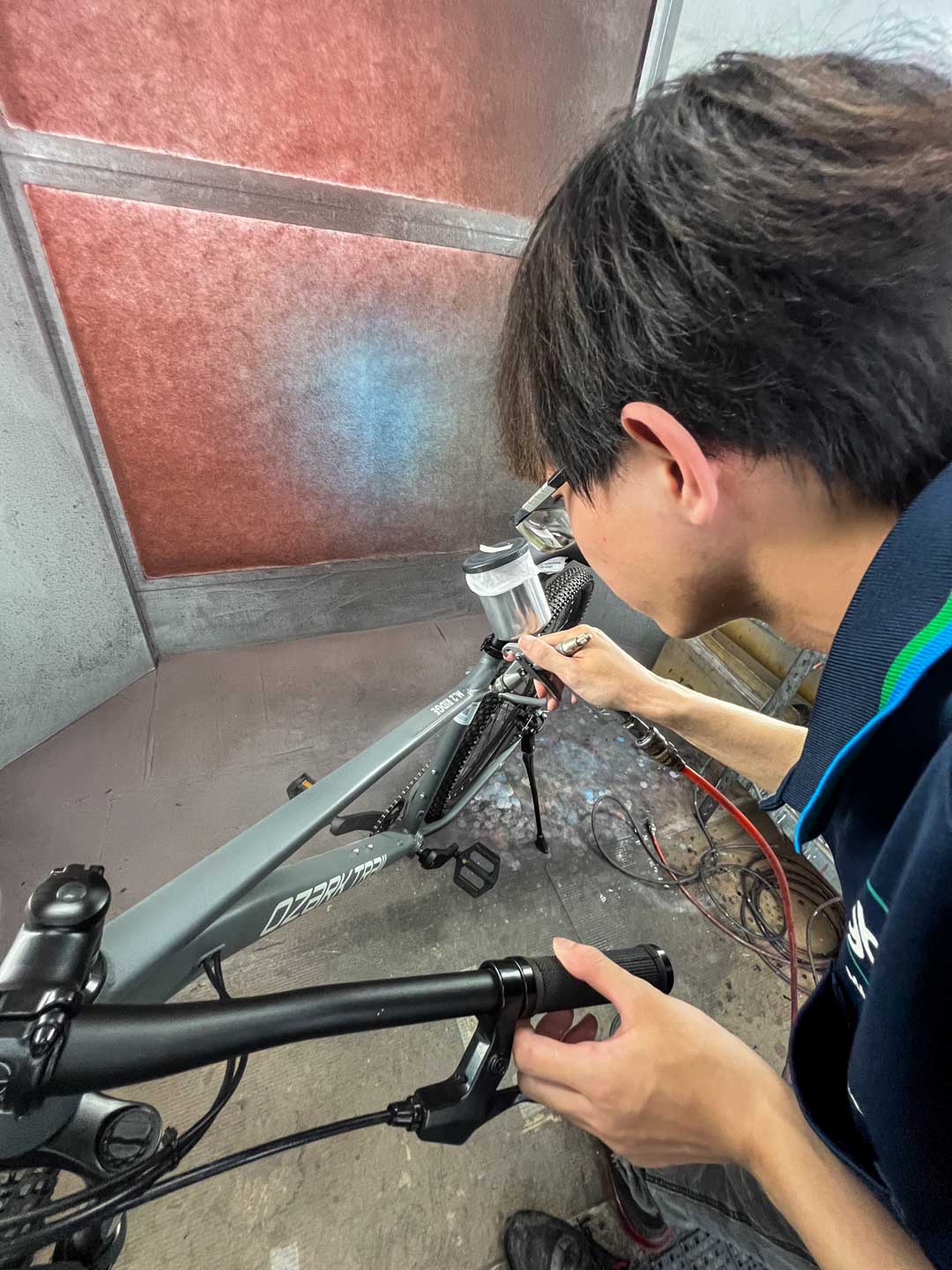
Bicycle Frame Painting: From Raw Material to Finished Product
Entering the production area, the space resembles a small-scale workshop. Here, raw frames—commonly known in the industry as “RTP” (Ready To Paint)—are transformed into finished products with a range of design schemes.
GBN emphasizes flexibility in its production approach. While many factories prioritize high-volume output, GBN focuses on smaller batch sizes, enabling them to handle more complex or customized orders.

A Focus on Small-Batch Production
The company regularly works within the following production volumes:
. Approximately 300 frames per month for complex, multi-layer paint designs.
. Up to 1,000 frames per month for simpler single-color or two-tone finishes.
This approach is especially well-suited to brands seeking specific aesthetic or technical finishes, without the constraints of large-scale minimum order quantities.
Vinyl Cutting and Graphic Preparation
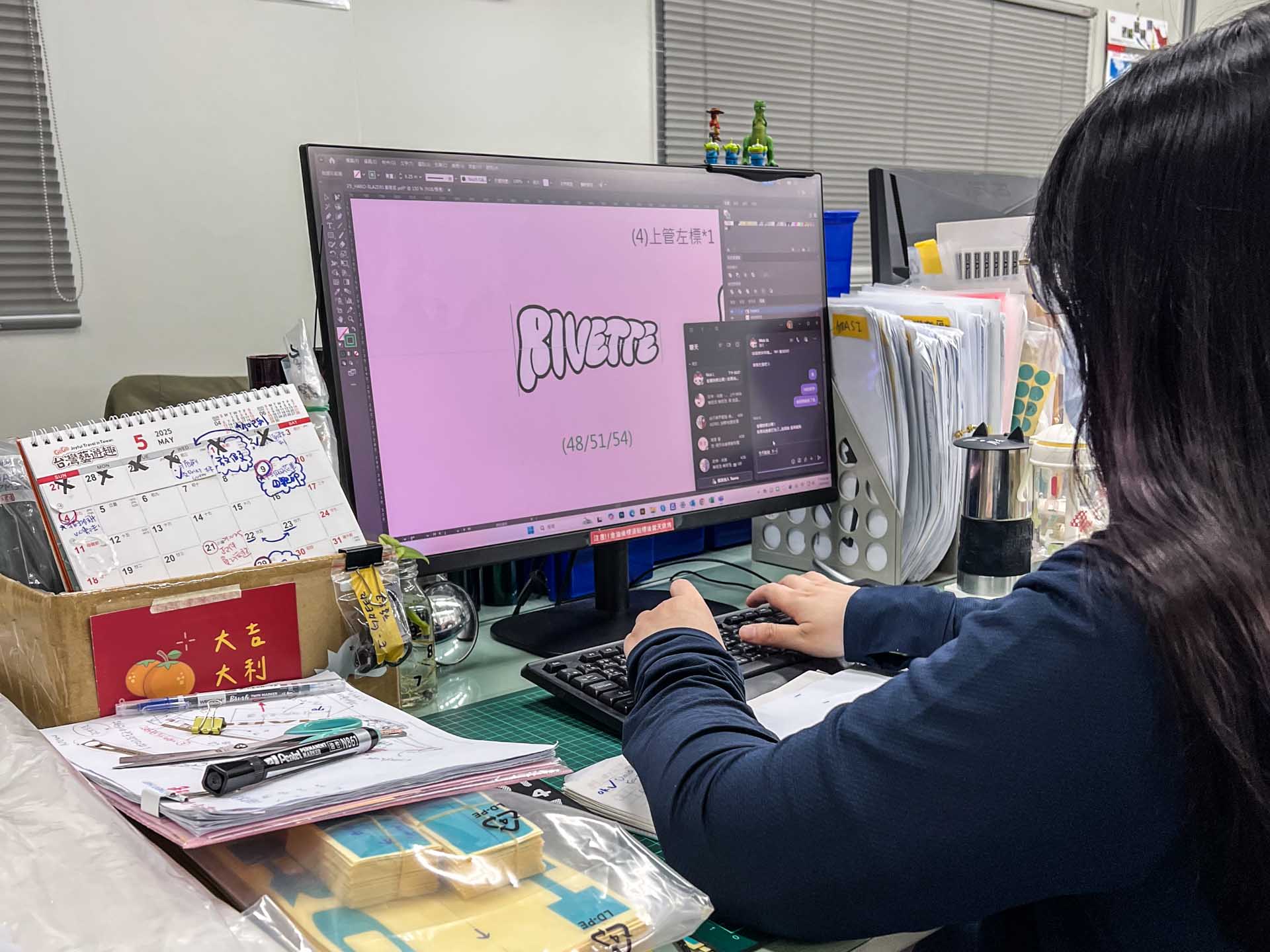
In one area of the facility, a small team handles vinyl cutting — a crucial step in producing accurate templates for paint masking. This helps streamline the workflow and minimizes errors before any paint is applied. Each stage demands close attention to detail: even a slight misalignment in a digital file can result in a visible defect on the finished frame.
The technicians focus on precision, matching vector files to physical frame dimensions with minimal tolerance. This system also supports brands that may only have a sample frame in a single size. By using vinyl masks derived from initial prototypes, scaling designs to other frame sizes becomes a more efficient and consistent process.
Addressing Paint-Related Logistics in Asia
In the bicycle manufacturing supply chain, transporting frames between multiple vendors — including builders, painters, and assemblers — often results in delays, added costs, and an increased risk of damage.
GBN seeks to simplify this process by offering a more integrated solution. According to the team, consolidating all stages in one location helps streamline operations. Frames can be finished and prepared for final shipping without the need for multiple transfers.
An open area in front of the factory displays sample bikes, highlighting GBN’s commitment to showcasing the complete production cycle — from concept to shipment-ready product.
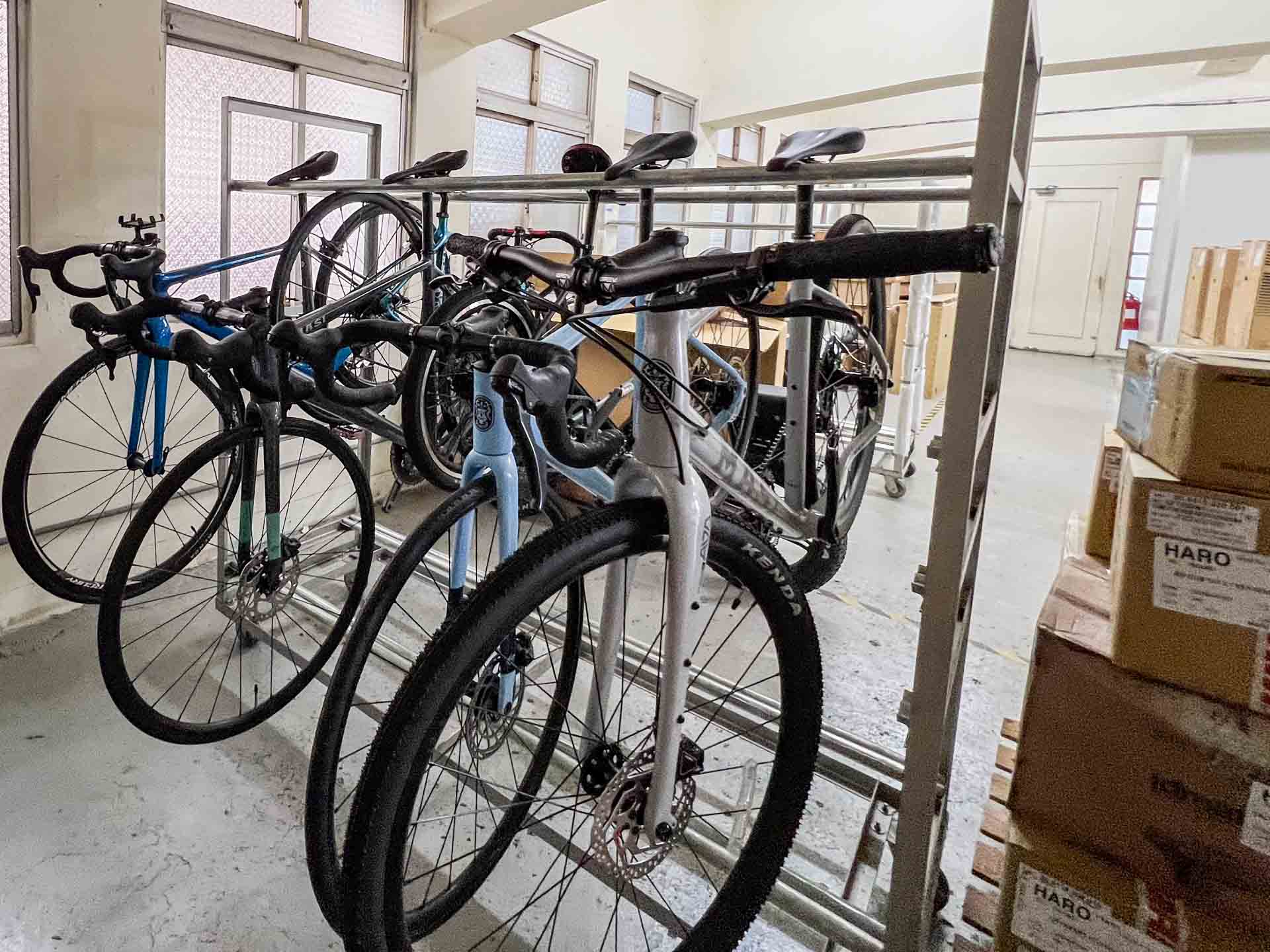
Doing the business the right way
Clients can arrive with a concept and leave with shipment-ready bikes. Every handoff eliminated means fewer complications down the line. A dedicated workshop area allows clients to build their first sample bike on-site, minimizing unnecessary movement between facilities.
Back in the meeting room, Jason shares what he calls GBN’s “raised bar” — the company’s commitment to operating above industry standards.
“From the very first moment we started building this factory,” he explains, “we made sure to install all necessary systems to comply with environmental regulations.” GBN’s compliance measures include:
Environmental Compliance
. Certified air and water pollution control systems.
. Proper treatment and disposal of paint waste.
. Regular regulatory audits to ensure ongoing adherence.
Business Licenses and Ethics
. Complete manufacturing and export documentation.
. Transparent and responsible business practices.
. Future-proofing: regular policy reviews anticipating EU and US regulatory changes.
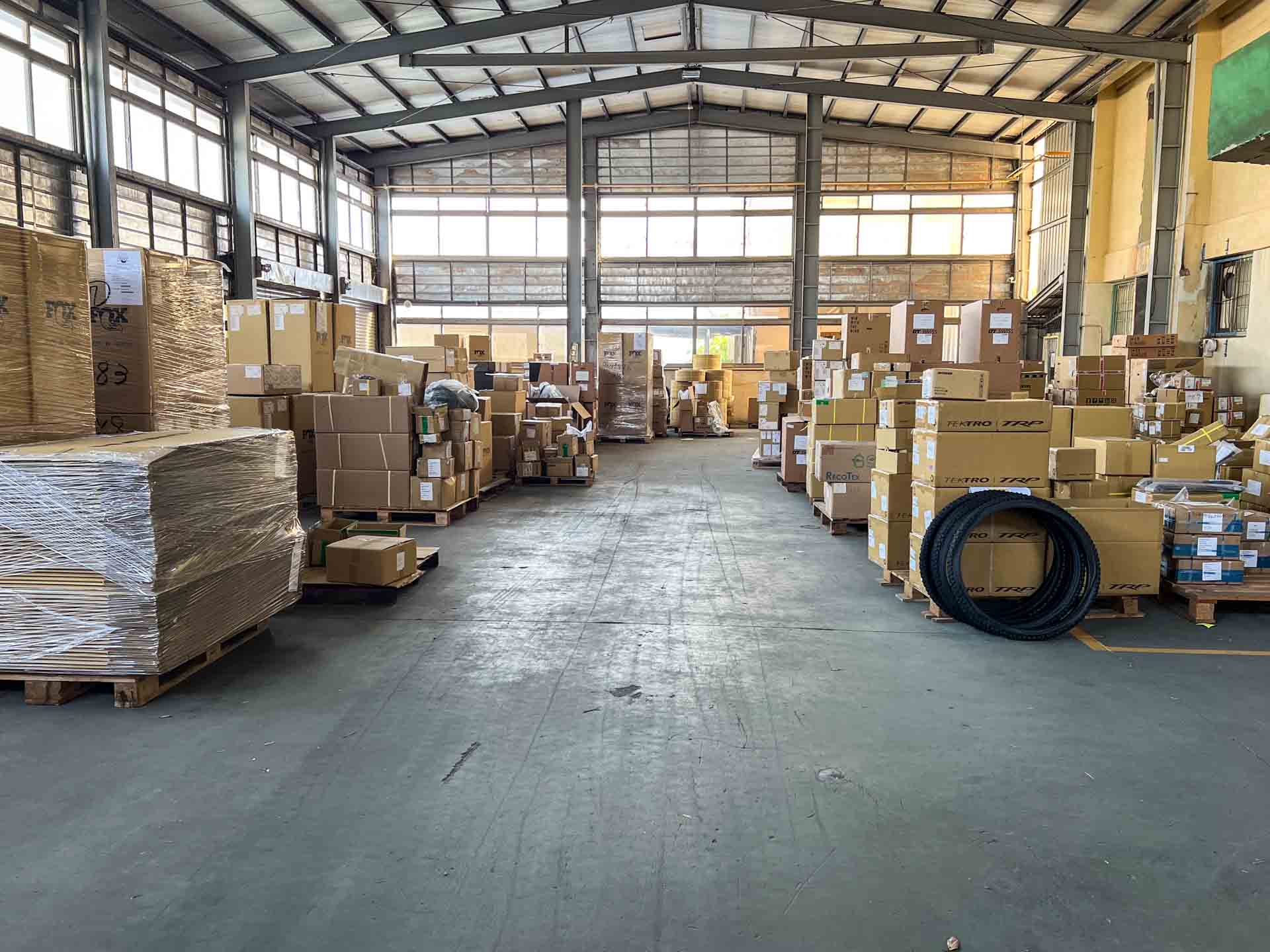
Why Brands Stay
Back in the courtyard during shift change, our conversation continues. The stories I hear reveal some of the company’s less quantifiable strengths:
. The sample builder who can detect subtle frame inconsistencies by touch
. The paint technician who keeps a “secret” notebook of custom color formulas
. The logistics coordinator who ships samples with the precision of a ticking clock
As the afternoon sun slants through the warehouse skylights, Jason sums up their philosophy:
“We’re not artists or logistics experts — we’re bicycle people who solve problems. When a brand trusts us with their frames, they’re trusting our entire team’s collective experience.”
More frames…
Final Assessment
After an afternoon embedded at GBN, what stands out isn’t just their technical capabilities — though those are impressive — but their operational mindfulness.
In an industry where innovation is often focused on components or materials, GBN distinguishes itself by innovating in the spaces between: the unglamorous but essential realms of workflow efficiency, regulatory compliance, and damage prevention.
For brands, this means fewer headaches and more freedom to focus on what really matters — creating great bikes. As the global supply chain becomes increasingly complex, having a partner who can expertly manage these behind-the-scenes challenges may well be the industry’s next competitive edge.
Thanks for reading!
👉 Stay in the loop — follow us on LinkedIn for the latest insights and expert perspectives. This blog is a passion project, and every bit of engagement helps.